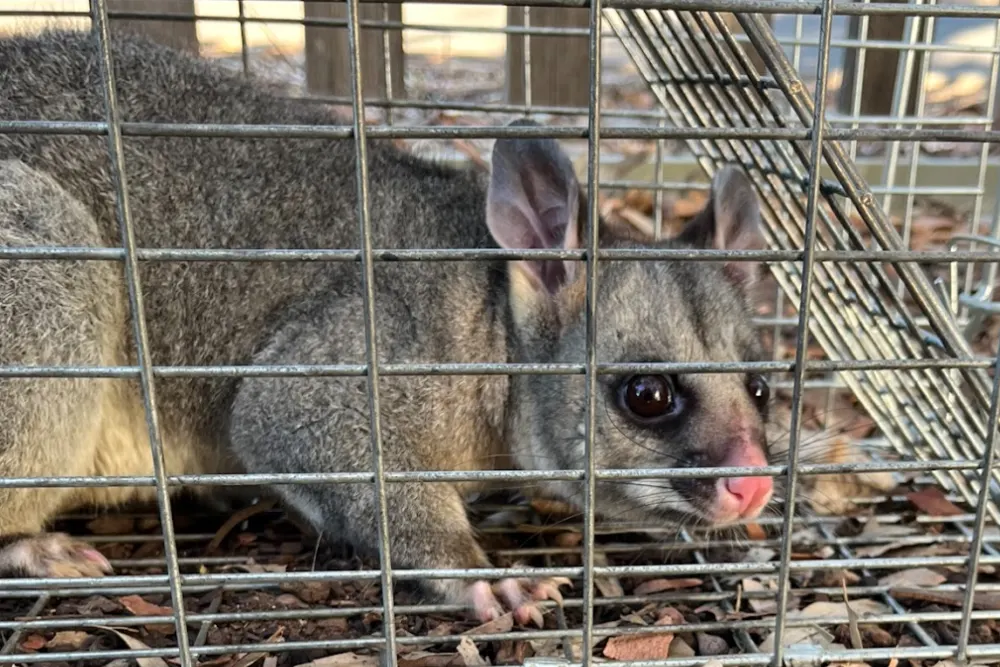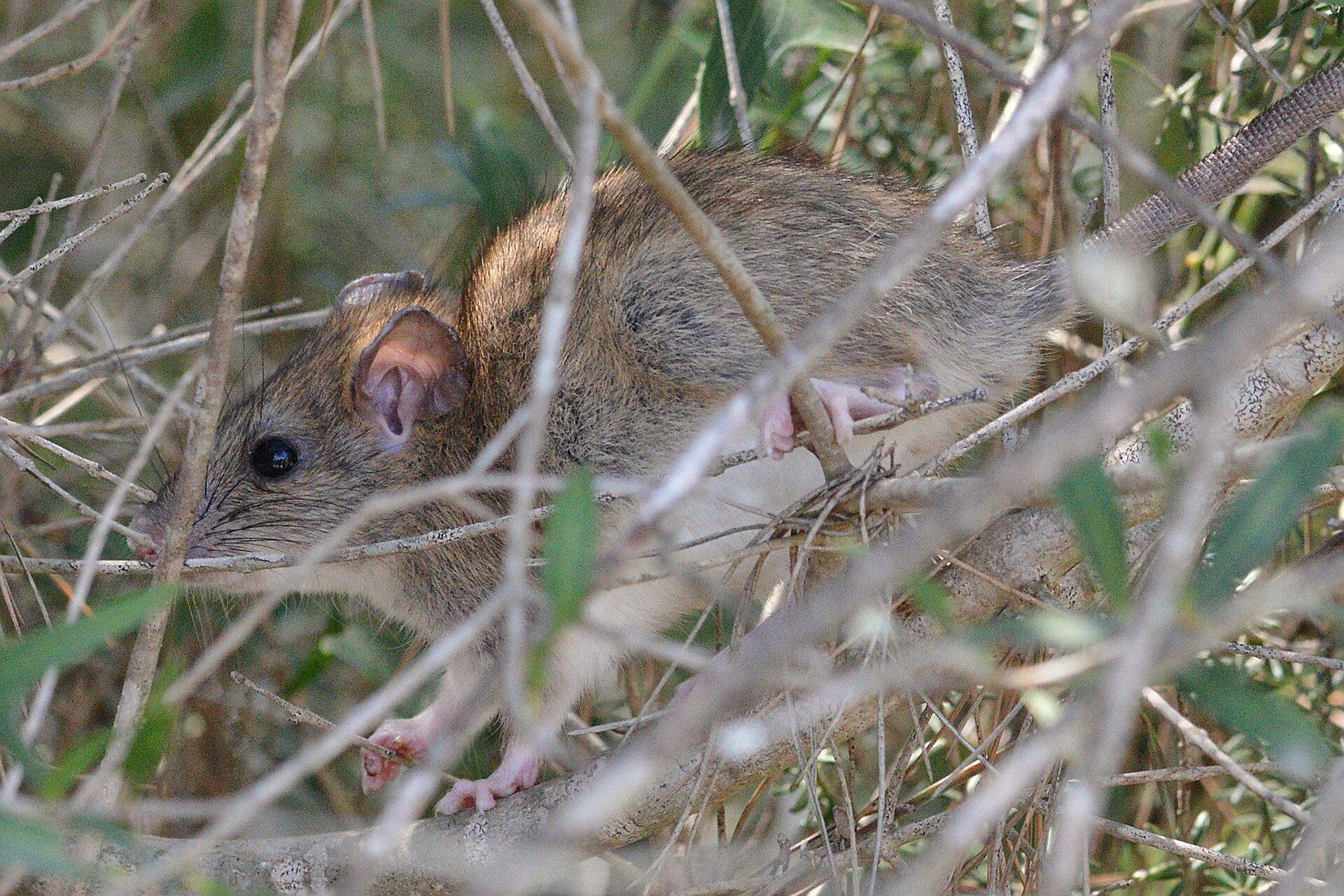
A decomposition odour is not a smell in the ordinary sense. It is a stream of volatile compounds coming off a physical source, and it will keep coming until that source is gone. This is why the plug-in, the aerosol and the bowl of vinegar all fail. They add fragrance to a room that still contains a decomposing animal.
Here is what is actually happening, how to find the source, and what removes the odour rather than covering it.
Why the smell is so persistent
Decomposition releases a specific set of gases — among them cadaverine and putrescine, along with sulphur compounds and ammonia. Human olfaction is extraordinarily sensitive to several of them, which is why a rat weighing 300 grams inside a ceiling can dominate an entire house.
Three things make the odour worse than the size of the animal suggests:
It is inside an enclosed cavity. A roof space or wall void concentrates the gases and then feeds them into the living space through downlight cut-outs, cornice gaps, vents and the ceiling itself.
The building absorbs it. Decomposition fluids soak into insulation, plasterboard, timber and dust. Those materials go on releasing odour after the carcass itself has dried out.
Warmth accelerates everything. A roof cavity in an Australian summer runs far hotter than the rooms below. Higher temperature means faster decomposition and a more intense odour peak.
The timeline if you do nothing
For a rat in a roof cavity, the pattern is fairly consistent:
- Days 1–2. Faint, sweetish, easy to dismiss as drains or rubbish.
- Days 3–5. Unmistakable. Blowflies appear indoors.
- Days 4–7. Peak intensity. This is when most people call.
- Weeks 1–2. Gradual decline as the carcass dries out.
- Beyond. Residual odour from contaminated material, often returning on humid days.
A possum runs three to six weeks on the same curve, and longer in a cool cavity in winter. Position matters too: a carcass on top of insulation dries faster than one buried in it; one lying against plasterboard drives fluid straight into the sheet.
The important point is that waiting does not clean anything up. It only lets the acute phase pass while leaving the contamination in place.
Locating the carcass
The odour itself is a poor guide, because gases travel along cavities and exit wherever they find an opening. The strongest smell in a bedroom frequently means the carcass is in the hallway ceiling.
Better indicators, roughly in order of usefulness:
Blowflies. The single best locator available. Adult flies find a carcass within hours and lay on it. If flies are appearing at one window or one downlight, the source is close to that point. A cluster of flies at a ceiling vent is close to a fixed address.
Staining. A brown or yellow patch on a ceiling or wall, sometimes with a greasy edge, marks the position directly. This is a late sign and usually means the sheet needs replacing.
A methodical cavity search. In an accessible roof space, working the perimeter and the areas above where the smell is strongest, checking on top of insulation, along wall plates, in corners and around chimney and vent penetrations. Most carcasses are found this way.
Prior activity. If rodent treatment happened recently, the search starts around the bait stations and the known runs. If a possum was excluded recently and the smell started days later, the search starts at the den site — and that scenario should prompt a check for young that were sealed in.
Where it is not accessible. Sealed wall cavities, cathedral ceilings, subfloors with restricted clearance and behind fixed cabinetry are the difficult cases. These are where experience and, on occasion, a small access cut become necessary.
What does not work
Air fresheners, plug-ins and aerosols. Fragrance over decomposition produces a worse smell than either alone, and does nothing to the source.
Vinegar bowls, bicarb, coffee grounds, charcoal. Mildly absorbent in a small enclosed space. Against an active source in a ceiling cavity, negligible.
Ozone generators run unsupervised. Ozone does break down odour compounds, but it is a respiratory irritant, it damages rubber and some plastics, and it does nothing while the source remains. It is an after-the-fact tool at best, and it is not something to run in an occupied house.
Waiting for it to dry out. Reduces intensity. Leaves the contaminated material and the residual odour in place.
Bug bombs. Kills adult flies in the room. The larvae are on the carcass in the cavity, and the next generation follows.
What actually removes the odour
Four steps, in order. Skipping any one of them is why odours come back.
1. Locate and remove the carcass. Everything else is pointless until this is done. The carcass is double-bagged and disposed of appropriately.
2. Remove contaminated material. Insulation the carcass was lying in, saturated dust, and any material the fluids have soaked into. This is the step most often skipped, and it is the reason a smell returns two weeks after somebody "found the rat". Insulation acts as a sponge and cannot be cleaned in place.
3. Disinfect the area. A hospital-grade disinfectant applied to the site and the surrounding surfaces. This deals with the bacterial load, not just the odour, and it is why this work is done in full PPE.
4. Neutralise the remaining odour. An enzymatic or oxidising odour neutraliser that breaks down the residual compounds chemically. Not a fragrance. The distinction is straightforward: a masking product smells of something else, while a neutraliser leaves the space smelling of nothing at all.
Where fluids have penetrated plasterboard, the affected sheet may need to be cut out and replaced. Sealing over a stained sheet traps the source behind paint and the odour reappears in the first humid week.
Access: will the wall need to be cut?
Usually not. Most carcasses in a house are reachable through the roof manhole or the subfloor, and a technician will always exhaust the non-destructive routes first.
Where a carcass sits inside a sealed wall cavity between studs with no access from above or below, a small access opening is sometimes the only way to reach it. What should happen in that case:
- The location is confirmed as precisely as possible before anything is cut — fly activity, staining, sound, and where the cavity is closed off
- The proposed opening is discussed and agreed with you first, including who is responsible for making it good
- The cut is made in the least conspicuous serviceable position, sized to reach rather than to explore
- Sanitisation is done through the opening before it is closed
An operator who starts cutting without that conversation is not doing the job properly.
The 48 hours after removal
The odour does not vanish the moment the carcass leaves. Residual compounds sit in dust and surfaces and take a day or two to clear.
What helps in that window: ventilating with windows and doors open and a fan moving air out rather than around, running the exhaust fans, and leaving the roof manhole open for a period if the weather allows. What does not help is closing the house up and spraying fragrance.
If a strong odour is still present after two or three days, it usually means one of two things: contaminated material was left in place, or there is a second carcass. Both happen, particularly after a baiting program.
Preventing the next one
A dead animal in a cavity is a symptom. Something got in, and then it died in there.
- Seal the building. Rats need about 20 millimetres, mice about 6. Steel mesh, metal flashing and mortar — not foam or silicone.
- Be careful with bait. Loose bait in a roof cavity produces exactly this outcome: poisoned rodents die where they nest, out of reach. It also creates a secondary poisoning risk to owls, raptors and pets. Managed stations and trapping give control over where the animal ends up.
- Screen the openings. Vents, weep holes and chimneys with purpose-made covers so birds and possums cannot enter and become trapped.
- Check the roof after storms. Displaced tiles and lifted flashing are the openings that admit both the animal and the water.
- Deal with rodent activity when you first hear it. The cheapest dead animal job is the one that never happens.
When to call
Call if the smell has lasted more than a couple of days and you cannot find the source, if blowflies are appearing indoors, if a stain has appeared on a ceiling or wall, if the suspected location is in a wall cavity or a roof space you cannot safely access, or if the smell followed a baiting program or a possum exclusion.
That last case deserves particular attention. A decomposition odour that starts a few days after a possum was excluded is a strong indicator that dependent young were sealed in — and that needs someone on site quickly, not next week.
What removal costs, and what changes the number
Dead animal work is priced on access and contamination, not on the size of the animal.
Whether the carcass can be located quickly. A rat visible from the manhole is a short job. One in a sealed wall cavity, above a cathedral ceiling or in a restricted subfloor takes considerably longer to find, and finding it is most of the work.
Access. Roof cavity with a clear manhole and walkable joists is straightforward. Crawl-height subfloors, restricted roof spaces and second-storey voids add time and sometimes equipment.
Whether an access opening is needed. A small cut, and making it good afterwards, is additional work — and something that should be discussed and agreed before anything is cut.
Contamination. Removing and replacing soiled insulation is separate work from the removal itself. A carcass lying on top of a batt affects a small area; one that has been in place for weeks in a warm cavity affects considerably more.
Sanitisation and deodorising. Hospital-grade disinfectant and a proper odour neutraliser across the affected area, which scales with the size of that area.
Species and duration. A possum produces far more fluid than a rat and has usually been there longer by the time anyone calls, so both the contaminated area and the remediation are larger.
The inspection should be free, and the price fixed before work starts. A quote given over the phone without anyone having looked is, at best, a range.
Health risks worth knowing about
The odour is what prompts the call, but it is not the reason the work is done in full protective equipment.
Bacterial load. A decomposing carcass and the material around it carry a substantial bacterial population. Contact with contaminated insulation, or disturbing dried droppings and urine, is the risk pathway — not the smell itself.
Rodent-borne disease. Leptospirosis, salmonella and other rodent-associated organisms are present in urine and droppings. The recognised danger is dry-sweeping or vacuuming contaminated material, which aerosolises it and turns a contact risk into an inhalation risk.
Fly-borne contamination. Blowflies emerging from a carcass in the cavity move directly to kitchen surfaces and food. This is a practical reason to deal with a carcass quickly rather than wait it out.
Mites and fleas. Ectoparasites leave a dead host and disperse looking for a new one, which is why a carcass in a ceiling is occasionally followed by bites in the rooms below. These usually resolve once the source is removed and the area is treated, but they are a reason not to leave the job sitting for a fortnight.
Air quality in the living space. The gases themselves are unpleasant rather than acutely dangerous at the concentrations a household experiences, but people with asthma or other respiratory conditions frequently report a genuine worsening of symptoms while a carcass is decomposing above the ceiling. That alone is a reasonable basis for treating the removal as urgent rather than something to schedule for next month.
The sensible precautions for a homeowner are simple: do not enter the cavity to search without gloves, a P2 mask and eye protection; do not handle the carcass or contaminated insulation bare-handed; do not dry-sweep anything; keep children and pets out of the affected area; and ventilate while work is under way.
None of this is a reason for alarm. It is a reason to treat the job as remediation rather than tidying up, and to let the person doing it wear the equipment the work calls for.
Want it handled instead?
A licensed technician is on site within 60 minutes across Sydney, Brisbane, Canberra and Melbourne. Free inspection, fixed price, booking confirmed within 10 minutes.