

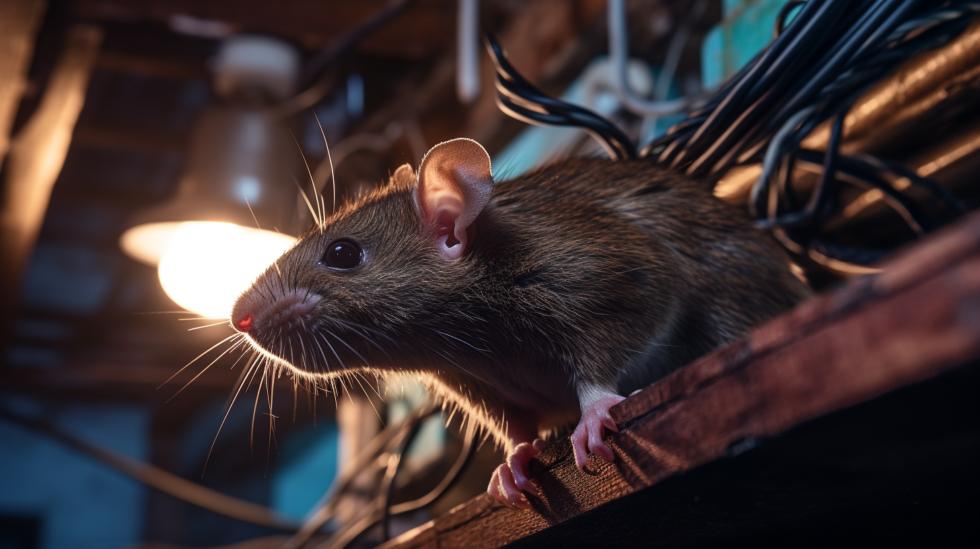
Rats · Mice · Same-day treatment
Rodent control
that ends it
Rodents breed faster than most people treat them. A pair of roof rats can put 40 young into your ceiling in a year, so anything short of finding the nest, cutting the food source and sealing the entry is just feeding the population.
What rodent control actually is
Rodent control is the treatment and exclusion of rats and mice from a building. A licensed technician inspects for runs, droppings and entry points, deploys tamper-proof bait stations and traps, removes carcasses, then seals gaps down to 6mm so the infestation cannot re-establish. Inspection is free and we are on site within 60 minutes.
- 7–14 days to control a home
- Tamper-proof stations only
- Free inspection
- 25% off first service
Why it can't wait
Wiring, food,
and disease.
Rodent teeth grow continuously, so they gnaw whatever keeps them worn down — including cable insulation, which is why rodents are a recognised cause of house fires. They also contaminate stored food and carry leptospirosis and salmonella.
- Chewed wiring in roof cavities and behind appliances.
- Contaminated pantry stock, packaging and food-prep surfaces.
- Leptospirosis, salmonella and hantavirus risk from droppings and urine.
- Insulation destroyed and compressed into nesting material.
Free quote
Book rodent control
Free inspection, fixed price, 25% off your first job.
Identify it first
Rat or mouse?
It changes the job.
Bait placement, station size and proofing gaps all differ. Getting the species wrong is the single most common reason a DIY treatment fails.
How you know they are in
Six signs you have
an active population.
Fast scurrying in the walls
Rats and mice move quickly and lightly. Rapid scratching inside a wall cavity or above the ceiling is rodent, not possum.
Droppings along skirting
Dark, rice-grain droppings in cupboards, roof cavities or behind the fridge mark an active run.
Gnawed packaging and cables
Rodent teeth never stop growing, so they chew constantly — including electrical cable, which is the leading cause of pest-related house fires.
Greasy rub marks
Rodents follow the same path nightly and leave dark grease smears along skirting boards and pipe runs.
A sharp ammonia smell
Concentrated urine in a nesting area smells sharply of ammonia, especially in a closed roof space.
The dog fixating on a wall
Pets hear and smell them long before you do. Sudden interest in one section of wall is worth a look.
The treatment plan
What happens,
and when.
-
Day 0
Inspection and deployment
Species confirmed, runs mapped, tamper-proof stations and traps placed on the active routes.
-
Day 3–5
First knockdown
Bait take is heaviest here. Most of the population is gone before you notice the noise stopping.
-
Day 7–14
Monitoring visit
Stations restocked, carcasses cleared, activity re-checked. Control is confirmed, not assumed.
-
Final visit
Proofing to 6mm
Weep holes, pipe entries and roof junctions sealed so the next population has nowhere to move in.
For businesses
Restaurants, strata,
warehouses.
A rodent sighting in a food business is a closure risk, not an inconvenience. We work to food-safety requirements, schedule outside trading hours, and give you the documentation an auditor or council inspector will ask for.
- Service outside trading hours
- Documented station maps and visit logs
- Audit-ready reporting for food-safety inspections
- Ongoing programs for strata and multi-site portfolios
Book locally
Rodent control
in your city.




Suburb by suburb
Rodent Control
near you.
Every suburb below has its own rodent control page with local response times and a booking form. Not listed? Call 0468 070 392 — we cover the whole metro area of all four cities.
Rodent Control in Sydney NSW · 24 suburbs
Rodent Control in Brisbane QLD · 24 suburbs
Rodent Control in Canberra ACT · 24 suburbs
Rodent control
Rats, mice
and straight answers.
How do I get rid of rats permanently?
Treatment removes the current population; proofing keeps it gone. Rodents return to any building with a gap over 6mm and an accessible food source, so sealing and hygiene are what make it permanent.
How long does rodent treatment take to work?
Most residential infestations are controlled within 7–14 days. Heavy commercial infestations usually need two to three visits.
Is rodent bait safe around children and pets?
Bait is placed inside locked, tamper-proof stations and positioned away from living areas. Where children or pets are a concern we can run a trap-only program instead.
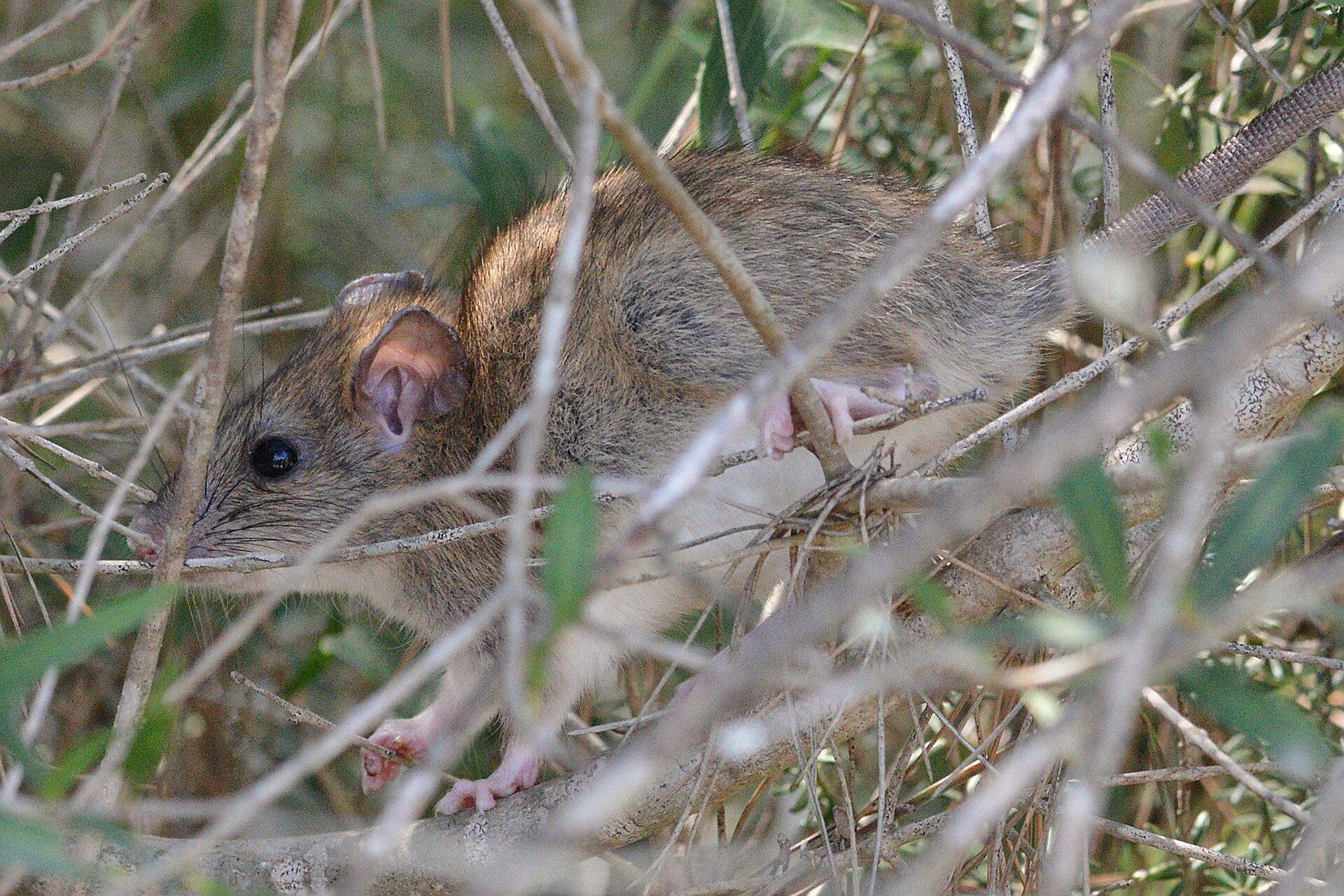
Do I have rats or mice?
Mice leave small droppings the size of a rice grain and rarely travel far from the nest. Rats leave larger droppings, make heavier noise and follow fixed runs. We confirm the species during inspection.
Will dead rodents smell inside the walls?
It can happen with any baiting program. We use placement that keeps carcasses recoverable, and if one does die in a cavity our dead animal removal service handles it.
Do you treat restaurants and food premises?
Yes. We work to food-safety requirements, provide documentation for audits, and can schedule outside trading hours.
How much does rodent control cost?
Inspection is free and the price is fixed before work starts. Cost depends on property size and how much proofing is needed, not on the number of rodents.
Can I just use supermarket baits?
Supermarket baits kill the rodents that find them and leave the nest breeding. Without species identification, correct placement and proofing, the population rebuilds within weeks.