Most failed rodent treatments start with the wrong species. Bait station spacing, trap placement, the size of gap you need to seal and where the nest sits all differ between rats and mice. Treat a mouse infestation like a rat infestation and you will place too few stations too far apart. Treat rats like mice and you will seal the wrong openings.
Here is how to work out what you have, using evidence you can check tonight.
The fastest tell: droppings
Droppings are the most reliable identifier available to a homeowner, because they are the one piece of evidence you will always find near an active run.
- Rat droppings are 12 to 18 millimetres long, dark, and tapered at one or both ends. Roof rat droppings are more curved and pointed; Norway rat droppings are blunter and chunkier. They cluster along a fixed route.
- Mouse droppings are 3 to 6 millimetres — about the size of a grain of rice — and scattered widely rather than concentrated. A single mouse produces 50 to 80 a day, which is why they appear everywhere.
Where you find them narrows it further. Droppings in the roof cavity and along the top of wall plates point to roof rats. Droppings in the subfloor, near the base of external walls and around drains point to Norway rats. Droppings inside kitchen drawers, behind the toaster and in the back of a pantry point to mice.
Noise: weight, speed and location
Both species are audible at night, but they sound different.
Rats produce heavier scurrying, often with a distinct gnawing sound. Roof rats travel along ceiling joists and the tops of walls, so the noise runs horizontally above you. You may hear intermittent thumps as they jump between surfaces.
Mice are much lighter. The sound is a fast, delicate scratching, usually inside a wall cavity rather than above the ceiling, and it often comes from the same section of wall night after night because mice stay close to a food source.
Neither sounds like a possum. If the noise is heavy enough to wake you and clearly travels the length of the ceiling, you are dealing with something considerably larger than a rodent.
Gap size: the 6mm and 20mm rules
This is where identification turns directly into a proofing plan.
- A mouse can pass through a gap of about 6 millimetres — the width of a pencil. That includes weep holes, the gap under a poorly sealed door, and the space around a pipe penetration.
- A rat needs about 20 millimetres — roughly the width of a thumb. Rats compensate by gnawing: they will enlarge a smaller opening in soft material until it is big enough.
The practical consequence is that mouse-proofing a building is far more demanding than rat-proofing it. Sealing to 20mm is achievable in an afternoon on most houses. Sealing to 6mm means going around the entire perimeter including weep holes, service penetrations, door thresholds and the junctions where different building materials meet.
Range and movement patterns
Rats are neophobic — wary of new objects — and creatures of habit. They establish fixed runs and follow them nightly, which is why they leave greasy rub marks along skirting boards and pipe runs. A roof rat will travel up to 50 metres from the nest to feed.
Mice are curious rather than cautious and will investigate a new object within a day. They stay close to home, typically within 3 to 10 metres of a food source, and they nibble constantly from many places rather than feeding heavily in one.
This changes trapping strategy fundamentally. Rat traps need to sit on established runs and may need days before the animal accepts the new object. Mouse traps work quickly but need to be placed in numbers, because each mouse covers so little ground.
Damage patterns
Rats cause structural damage. They gnaw cable insulation, water pipes, timber and building wrap, and their tunnelling under slabs and paths can undermine paving. The fire risk associated with rodents is mostly a rat problem, simply because of jaw strength.
Mice cause contamination damage. They shred insulation and paper for nesting, urinate constantly as they travel — leaving a distinctive ammonia smell in enclosed spaces — and contaminate stored food. Mice also chew wiring, but on a smaller scale.
Breeding speed, and why waiting costs you
Both species breed fast enough that a two-week delay changes the size of the job.
A pair of roof rats can produce five to ten young per litter, four to six times a year, with young sexually mature at around three months. A pair of mice produces five or six young per litter but can do so up to ten times a year, with maturity at six weeks.
The compounding is what people underestimate. A problem that would have taken one visit in March takes three in June.
Identifying the specific rat
If it is rats, narrowing further helps.
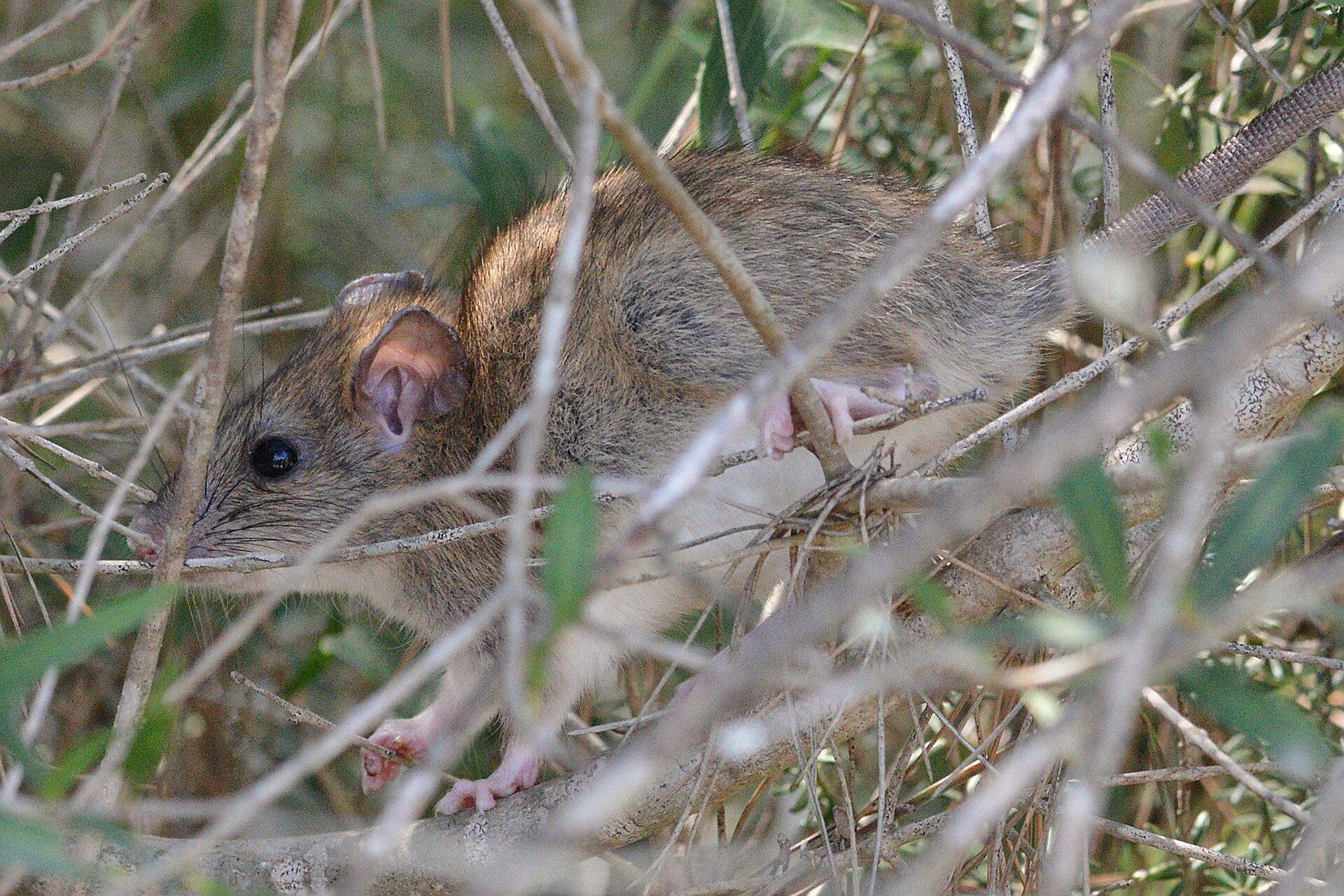
Roof rats (also called black rats) are the common urban rat in most of Australia. They are slim, excellent climbers, have a tail longer than the body, large ears and a pointed nose. They nest high — roof cavities, wall voids, palm trees and dense vine growth.
Norway rats (brown rats) are heavier, with a blunt nose, small ears and a tail shorter than the body. They nest low — burrows, subfloors, drains and compost.
The distinction determines where treatment goes. Baiting the subfloor for a roof rat population achieves very little.
What professional treatment does differently
The gap between a supermarket approach and a professional one is not the product. It is three things:
Species and site survey. Identifying what you have, finding the nest, and mapping the runs before anything is deployed. Placement on an active run is what makes any product work.
Tamper-proof stations. Locked stations keep bait away from children, pets and non-target wildlife, and keep it where the rodents actually travel. They also let a technician monitor take between visits, which is how you know whether the population is falling.
Proofing to the right tolerance. Sealing to 20mm for rats or 6mm for mice, with materials rodents cannot chew — steel wool packed into gaps, galvanised mesh, mortar and metal flashing rather than foam or silicone alone.
A note on what does not work
- Ultrasonic repellers. Independent testing has repeatedly failed to show sustained effect. Rodents habituate quickly.
- Peppermint oil and similar deterrents. No effect on an established population with a food source.
- Bait alone with no proofing. Removes the current population; the next one moves in through the same gap.
- Cats. A cat may catch individual mice. It does not control a breeding population in a wall cavity, and it will not touch a full-grown Norway rat.
The identification summary
| Signal | Rat | Mouse |
|---|---|---|
| Droppings | 12–18mm, tapered, on fixed runs | 3–6mm, rice-grain, scattered |
| Gap needed | 20mm | 6mm |
| Range from nest | Up to 50m | 3–10m |
| Noise | Heavy, gnawing, travels along ceilings | Light, fast, inside one wall |
| Nest location | Roof cavity, wall voids, subfloor, burrows | Behind appliances, in cupboards, in insulation |
| Main damage | Wiring, pipes, timber | Food contamination, insulation |
Work through those six rows with the evidence in your house and you will land on the right species. From there the treatment plan follows: find the runs, place on the runs, monitor until activity stops, then seal to the tolerance the species requires.
Where each species nests, and why it matters
Treatment goes where the animals live, not where you saw one.
Roof rats nest high. In Australian homes that means the roof cavity, the tops of wall cavities, boxed-in pipework, and outside in palm crowns, dense ivy, bougainvillea and untrimmed hedges. If you have a palm within jumping distance of the roof, you have a rat highway. Treatment concentrates in the ceiling and along the top plate.
Norway rats nest low. Burrows against the foundations, subfloor voids, compost heaps, drains and stormwater pits, and beneath decking and sheds. Treatment concentrates at ground level and around the perimeter, and often needs to address drainage.
House mice nest inside the envelope, close to food. Behind and under kitchen appliances, in the cavity behind cupboards, inside insulation batts, in stored boxes, and in wall voids adjacent to pantries. Treatment is dense and internal.
The most common DIY failure is placing everything at ground level in the yard when the population is living in the ceiling.
A room-by-room inspection you can do tonight
Kitchen. Pull out the fridge and the dishwasher. Check the corners of the cabinet under the sink, the back of the pantry, and the gap where the plumbing enters the wall. Look for droppings, gnawed packaging, and the smear of grease along a fixed path.
Laundry and garage. Check behind the washing machine and around the hot water service. Look at the base of the roller door for a gap wider than a pencil, and at any wall penetration for pipework.
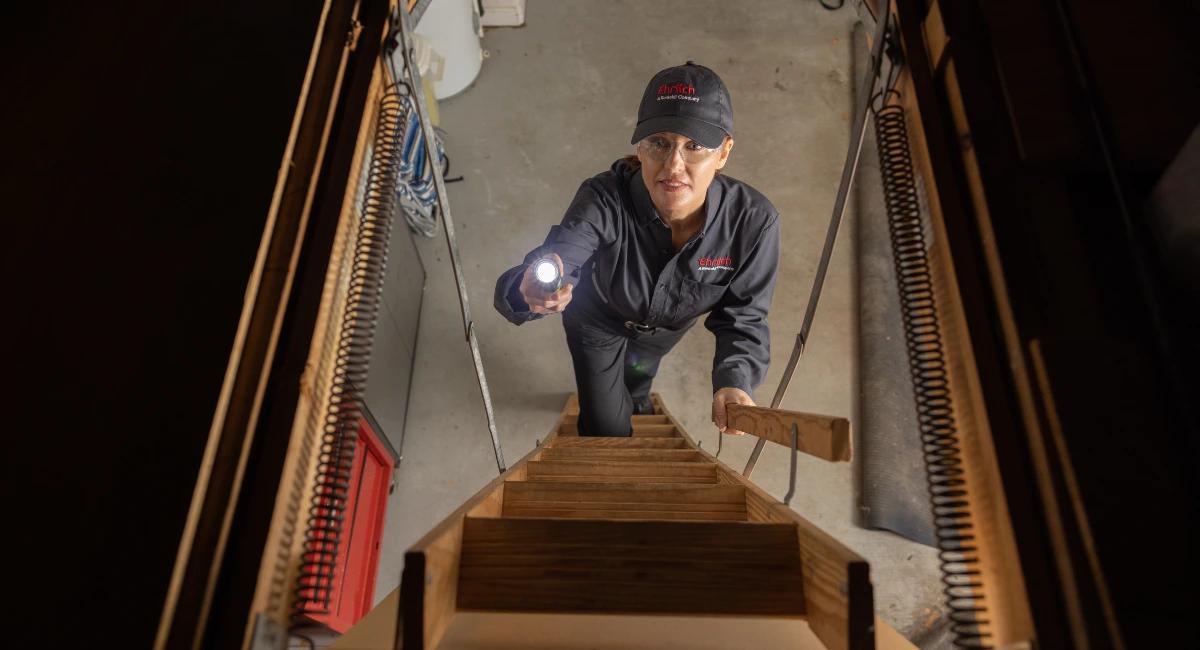
Roof cavity. From the manhole with a torch, without climbing in unless you know the ceiling structure is safe: look along the top of the wall plates for droppings, and at the insulation for tunnelling and flattened runs.
Subfloor. Look for burrow entrances at the perimeter, disturbed soil against foundations, and droppings on the bearers.
Exterior. Walk the perimeter looking for gaps at weep holes, service penetrations, air conditioning line entries, gaps under eaves, and any point where two different building materials meet. Check the roof line for overhanging branches within about 1.5 metres.
Seasonal patterns in Australia
Rodent pressure is not constant, and knowing the pattern helps you act before the problem compounds.
Autumn. The largest single driver of internal rodent callouts. Falling night temperatures push rodents from gardens and paddocks into buildings, and they arrive with a breeding population already established outside.
Winter. Populations concentrate indoors. Activity noise is at its most obvious because the animals are inside the envelope rather than moving in and out.
Spring. Breeding accelerates as temperatures rise and food becomes available. A small overwintering population becomes a large one quickly.
Summer. Outdoor food is abundant, so pressure inside eases in some properties — but this is also when rodents that have died inside cavities from earlier baiting produce odour complaints.
Rural and semi-rural properties see additional pressure after grain harvest and during regional mouse population surges, which have historically been severe in parts of NSW and Queensland.
Health risks, kept in proportion
Rodents in Australia are not a plague vector, but they are a genuine hygiene problem:
- Leptospirosis is spread through urine, and is a real risk where there is standing water and heavy rodent activity.
- Salmonella transfers to food preparation surfaces from droppings and feet.
- Rat-bite fever is rare but documented.
- Allergens. Rodent urine and dander are recognised asthma triggers, and a heavily contaminated roof cavity pushes those allergens into the living space through ceiling penetrations.
- Secondary parasites. Rodents carry fleas and mites, which look for a new host when the rodent population is knocked down.
Clean-up matters as much as control. Dry sweeping droppings aerosolises contaminated dust; dampening the area with disinfectant first and disposing of waste in sealed bags is the safer approach, with gloves and a mask.
Why a treatment sometimes looks like it failed
The noise moved instead of stopping. Usually means the treatment was placed off the active run and the population relocated within the building rather than declining.
Activity stopped, then returned in six weeks. Classic un-proofed treatment. The original population died; a new one entered through the same opening.
Bait is taken but nothing changes. Often a sign the food source competing with the bait is too attractive — an accessible bin, pet food left out, a compost heap, or chicken feed.
A smell started a week in. An animal died in an inaccessible void. It is a known trade-off of any baiting program and one reason placement is chosen with recoverability in mind.
What to ask a rodent control provider
- Which species have you identified, and where is the nest?
- Where will stations go, and why there?
- How many follow-up visits are included, and what triggers another one?
- What proofing is included, and to what tolerance — 20mm or 6mm?
- What happens if an animal dies in a cavity?
- Will I get a written report with station locations?
A provider who answers all six specifically is running a program. One who arrives, throws down bait blocks and leaves is selling you a fortnight of quiet.
Want it handled instead?
A licensed technician is on site within 60 minutes across Sydney, Brisbane, Canberra and Melbourne. Free inspection, fixed price, booking confirmed within 10 minutes.